
Featured Insights
Thought-provoking ideas, economic intelligence, and practical strategies to help you navigate the evolving landscape of business and governance.

The Architecture of Disruption: How the New Global Economic War Is Reshaping Africa's Future
The world is not experiencing a trade war. It is experiencing a fundamental restructuring of the global economic order - one Africa did not choose. For Nigeria and West Africa, the question is whether policymakers will act before the window closes.
Read More →
Nigeria's Infrastructure Moment: From Deficit to Defining Opportunity
Nigeria's $2.3 trillion infrastructure gap is not the story - it is the starting point. The real question is whether the convergence of reform momentum, institutional capital, and private sector readiness will finally close the distance between plan and delivery.
Read More →
Nigeria's 2026 Economic Outlook and What It Means for Business
The macroeconomic forces shaping Nigeria in 2026 are neither uniformly threatening nor uniformly encouraging - they are nuanced, and the businesses that navigate them well will be those that read them accurately rather than reactively.
Read More →
Managing Margin Erosion in Nigerian FMCG
Margin erosion in Nigerian FMCG is not a pricing problem. It is a structural problem - driven by input cost volatility, distributor power, and trade spend that is rarely measured with the rigour it demands. This piece provides a framework for addressing it.
Read More →
Capital Raising in African Aviation: Lessons from the Field
Aviation is one of Africa's most capital-intensive and most misunderstood sectors. Drawing on direct advisory experience in African aviation transactions, this piece examines why conventional capital raising frameworks fail - and what actually works.
Read More →
Why Nigerian Boards Need Commercial Resilience Diagnostics
Most Nigerian boards can tell you their revenue. Few can tell you how much of it will survive the next market disruption. Commercial resilience diagnostics are no longer optional - they are the missing instrument in board-level governance.
Read More →
The Case for Process Optimisation in West African Manufacturing
West African manufacturers are leaving significant margin on the factory floor. The efficiency gains available through structured process optimisation are not marginal - and the organisations that pursue them now will be structurally advantaged when cost pressures intensify.
Read More →
Understand the Power of WHY: Unlock the Path to Business Success
Simon Sinek's Golden Circle is one of the most cited frameworks in business - and one of the least rigorously applied. The organisations that genuinely build from Why outward do not just communicate more compellingly; they make better strategic decisions at every level.
Read More →
Why Accountability in Nigeria’s Governance Matters Now More Than Ever
Accountability is not a governance aspiration in Nigeria - it is the defining structural deficit. Until public institutions are held to measurable performance standards, the gap between policy intent and citizen outcome will persist regardless of which administration holds power.
Read More →
The Urgent Case for Fiscal Policy Reforms in Nigeria’s Economic Agenda
Nigeria's fiscal framework was not designed for the economic conditions it now faces. The case for reform is not ideological - it is arithmetical. Without structural changes to how the government raises and allocates revenue, the investment climate will remain structurally constrained.
Read More →
How to Craft Public Policies That Deliver Real Impact in Governance
The gap between policy design and policy impact in Nigeria is not a technical failure - it is a process failure. Policies that deliver real outcomes share a set of structural characteristics that are learnable, replicable, and too rarely applied.
Read More →
Top Strategies to Accelerate MSME Growth in Nigeria
MSMEs account for the majority of Nigerian employment and a significant share of GDP - yet they operate in an environment that is structurally hostile to their growth. Addressing that hostility requires a coordinated approach to infrastructure, regulation, and market access.
Read More →
Unlocking Leadership Potential: The Strategic Value of Middle Managers
Middle managers are the most underleveraged asset in most Nigerian organisations. They sit at the precise intersection of strategy and execution - and the quality of that interface determines whether organisational intent becomes operational reality.
Read More →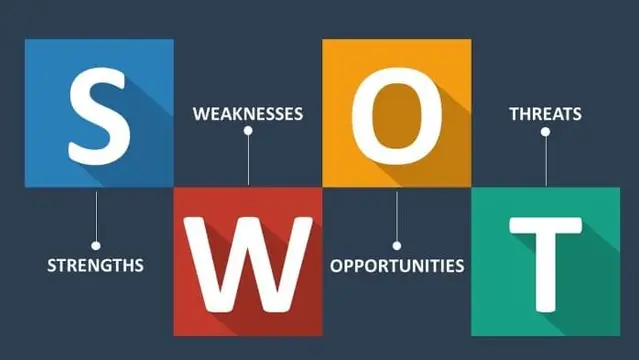
Embracing the Future: Unleash the Power of Emerging Opportunities
Every significant market shift creates winners and losers simultaneously. The organisations that consistently find themselves on the right side of that divide are not lucky - they have built the scanning and decision-making capabilities to act on emerging opportunities before they become obvious.
Read More →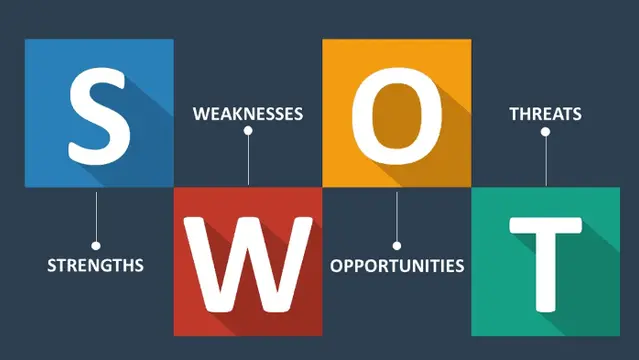
Unleashing Business Growth: Strategies to Assess and Address Weaknesses
Every organisation has weaknesses. The ones that grow consistently are not the ones without them - they are the ones that have built honest, systematic processes for identifying and addressing them before they become existential.
Read More →Leverage Your Organization’s Strengths for a Competitive Advantage
Competitive advantage is rarely created from scratch - it is more often built by identifying what an organisation already does better than anyone else and engineering the conditions for that capability to compound. Most organisations know their weaknesses. Few have a rigorous map of their strengths.
Read More →
How Fuel Prices Are Crushing Consumer Budgets in Nigeria
The full economic cost of Nigeria's fuel price dynamics extends well beyond the pump. It runs through transport costs, food prices, production economics, and ultimately into household purchasing power - compressing consumer budgets in ways that aggregate data consistently understate.
Read More →
Unlocking Nigeria’s Maritime Potential: A Hidden Engine for Economic Growth
Nigeria has one of the longest coastlines in West Africa, the continent's largest port complex, and an inland waterway network that is almost entirely underdeveloped. The maritime sector is not a niche economic story - it is a central one, and it is being told too quietly.
Read More →
Proven Operating Strategies to Strengthen Nigeria’s Retail Sector
Nigeria's retail sector rewards operational discipline more than almost any other market on the continent. The businesses that sustain growth here are not necessarily the largest - they are the most rigorously managed.
Read More →How to Build a Winning Mindset for High-Impact Strategy Sessions
The quality of a strategy session is determined before anyone enters the room. The frameworks, facilitation, and analytical tools matter - but they are multiplied or neutralised by the mindset that participants bring to the table.
Read More →How to Use SWOT Analysis for Smarter Strategic Decisions
SWOT analysis remains one of the most widely used and most poorly executed strategic tools in business. Its power is not in the four quadrants - it is in the quality of the intelligence that populates them and the discipline with which the resulting decisions are pursued.
Read More →How to Run High-Impact Strategy Sessions Using a Powerful SWOT Framework
A SWOT analysis is only as valuable as the quality of the conversation it generates. In the wrong hands it produces a list. In the right hands it produces a decision. The difference lies in the facilitation - and in knowing what to do with the output.
Read More →
The Ultimate Guide to Writing an Effective Training Report
A training report is not a compliance document - it is a strategic communication. Written well, it makes the case for continued investment in capability development. Written poorly, it becomes the reason that investment gets cut.
Read More →
3 Proven Strategies to Align Your Business with the UN Sustainable Development Goals
The Sustainable Development Goals are not a CSR framework - they are a map of where global capital, regulation, and consumer preference are heading. The organisations that align with them now are not being altruistic. They are being strategic.
Read More →
10 Proven Strategies to Boost Staff Retention in Nigerian Workplaces
Staff turnover in Nigeria is consistently undercosted. When the full expense of recruitment, onboarding, and lost institutional knowledge is accounted for, retention becomes one of the highest-return investments an organisation can make - and most organisations are not making it deliberately.
Read More →
Diaspora Remittances: A Vital Engine for Nigeria’s Economic Growth
Nigeria's diaspora remits over $20 billion annually — more than foreign direct investment, more than official development assistance. That capital is largely flowing into consumption. The strategic question is how to redirect even a fraction of it toward productive investment.
Read More →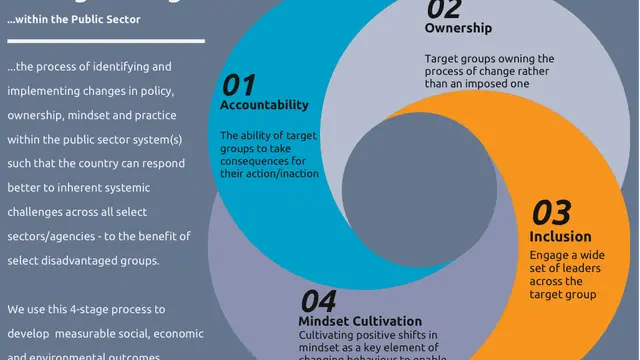
Institutional Strengthening as the Key to Reviving Nigeria’s Economy
Nigeria's economic challenges are not primarily a resource problem or a policy problem - they are an institutional problem. Stronger institutions do not just improve governance, they alter long-term capital investment commitments to the Nigerian market.
Read More →
Fuel Subsidy Removal in Nigeria: What Every Citizen Should Know
The removal of Nigeria's fuel subsidy was inevitable - the fiscal arithmetic made continuation impossible. What matters now is not the decision itself but the quality of the transition framework and whether the savings are channelled into the capital investments that justify the pain.
Read More →
Impact of claims on the Insurance Industry – post EndSARS
The EndSARS protests surfaced a structural vulnerability in Nigeria's insurance sector that had been building for years. The claims experience from that period is not just a liability event - it is a stress test whose lessons should be shaping underwriting, pricing, and product design today.
Read More →
Discussing the 2020 Finance Bill at TVC News
Nigeria's Finance Bill 2020 contained provisions with far-reaching implications for how businesses are taxed, how capital is allocated, and how the government funds its priorities. Understanding its mechanics is not optional for any serious operator in the Nigerian market.
Read More →
What Nigeria’s Rising Debt Profile Means for Growth and Stability
Nigeria's debt-to-GDP ratio is not yet at crisis levels - but the trajectory, the composition, and the debt service burden are all moving in directions that demand serious policy attention. The risk is not default. The risk is the crowding out of the capital investment the economy urgently needs.
Read More →
Achieving Business Sustainability & Growth – Current/Post Covid-19 Thoughts
The pandemic did not create Nigeria's business vulnerabilities - it exposed them. The organisations that emerged stronger were those that had already built adaptable operating models. The lessons from that period remain directly applicable to the disruptions ahead.
Read More →
7 Business Writing Principles Every Professional Should Know
The ability to write with clarity and authority is one of the most commercially valuable skills a professional can develop - and one of the most consistently neglected. These seven principles apply whether you are writing a board paper, a client proposal, or an internal memo.
Read More →
Why Nigeria Needs a Strong National Identity to Achieve Economic Progress
Economic progress and national identity are not separate conversations in Nigeria - they are the same conversation. The absence of a shared, forward-looking national identity creates the political conditions in which short-term patronage consistently defeats long-term investment in public goods.
Read More →
How Strong Institutions Can Drive Nigeria’s Economic Recovery
Economic recovery in Nigeria will not be delivered by any single policy intervention or administration. It will be built by institutions - by accountability frameworks - and by organisations that understand that sustainable growth requires structural foundations, not just cyclical tailwinds.
Read More →